
How to Recognize a Good Boulangerie
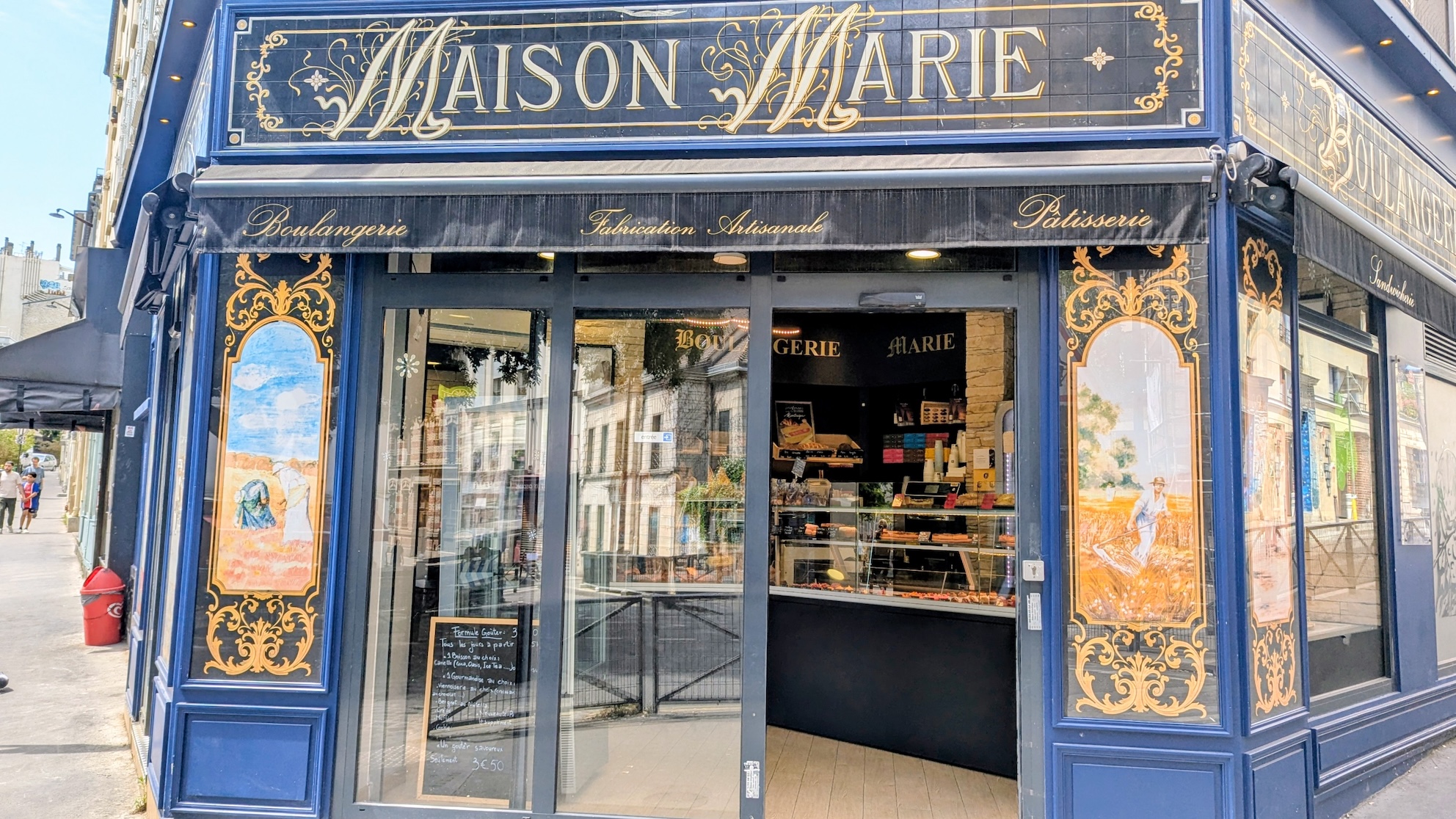
Imagine you’re in Paris, the city of flaky croissants and crusty baguettes, and you waste precious calories on mediocre pastries that taste like cardboard and disappointment rather than the buttery revelation you were hoping for. As a visitor, it’s surprisingly easy to fall into the trap: chains and bakeries selling mass-produced pastries are everywhere, particularly around the tourist hotspots.
So how do you make sure your calories – and your money – are well spent?
1. This goes without saying, but we’re doing it anyway: don’t buy your bread at the supermarket
Please don’t. The few cents you save come at the expense of taste, texture, and possibly your will to live.
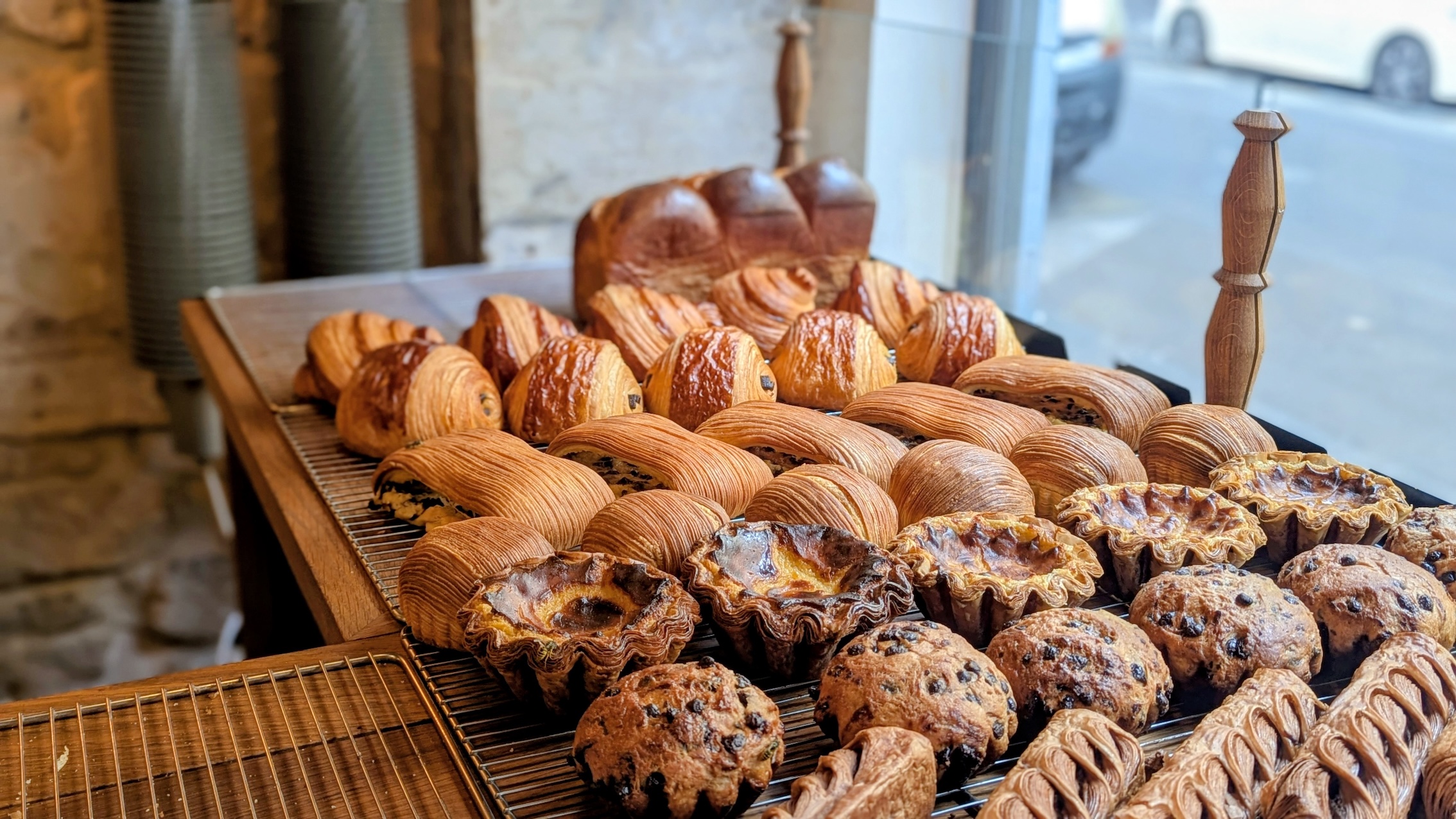
2. Look for long queues – but know how to read them
A line outside a boulangerie early in the morning or around the end of the working day is usually a very good sign. But not all queues are created equal.
A long line in the middle of the afternoon? Tourists. A long line outside a new-wave bakery that is good but wildly overpriced? Tourists, bobos or teenagers chasing the latest viral trend. A queue dominated by sportswear, slogan tees, berets and people taking photos of their croissants? Tourists.
But if you spot an elderly Parisian in line, you may have struck gold. That French grandmother has probably lived in the neighbourhood for decades, has tried every bakery within walking distance and has decided, through years of rigorous pastry research, that this is the one. Follow her.
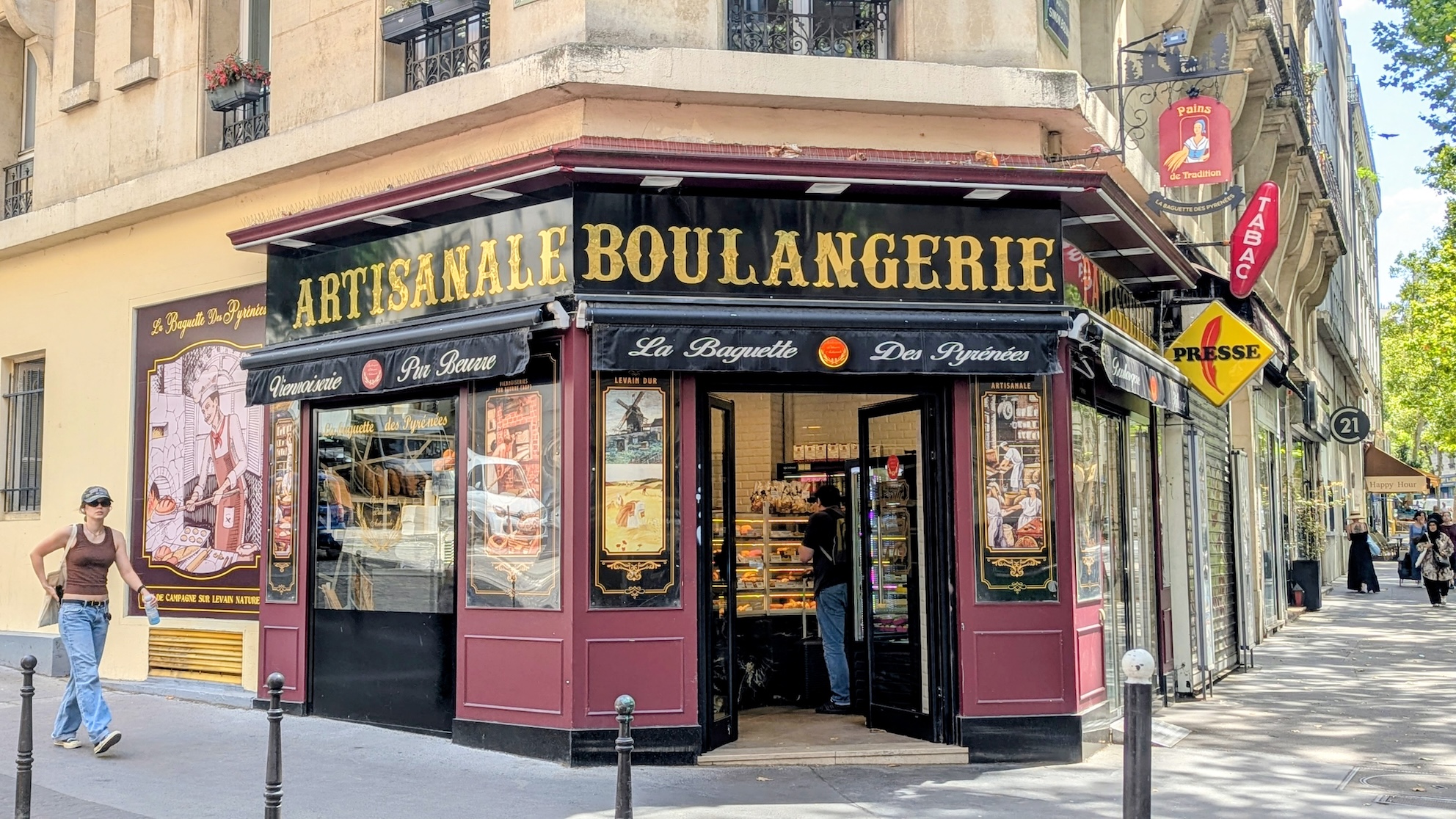
3. Look for ‘Boulangerie Artisanale’ or ‘Artisan Boulanger’
These terms are regulated in France and can only be used by businesses that meet specific requirements regarding the production of their bread, notably that it is made and baked on the premises, rather than simply reheated from frozen.
If a bakery only advertises itself as a ‘boulangerie’, that alone doesn’t tell you much about how its products are made. It may well be baking from pre-prepared or frozen dough.
You may have heard of the French chain Paul. They are legally not even allowed to call themselves a boulangerie without the artisanale – but rather a depôt de pain, a bread depot. Yikes.
There’s a little legal trap, though: the word ‘artisanale’ is not regulated in quite the same way across every type of food business. So while seeing it on a bakery is meaningful, spotting ‘pâtisserie artisanale’, for example, does not automatically guarantee that everything is made in-house.
4. Once you’ve found your boulangerie, order ‘une tradition’
Not just a baguette. Why? Because French law actually regulates what can go into one. Under the famous ‘bread decree’ of 13 September 1993, a traditional baguette must be made from wheat flour, water, salt and yeast and/or natural sourdough starter, without any additives or processing aids. It must also be made according to specific production methods.
A standard baguette, on the other hand, is subject to fewer restrictions and can contain a much wider range of ingredients.
So when in doubt, skip the generic baguette and ask for ‘une tradition, s’il vous plaît.’ And that’s how you do boulangeries like a Parisian.
Want the full Parisian experience?
Our bespoke itineraries take you beyond the obvious, built around local favorites, hidden gems, and places we genuinely love. No tourist traps. No viral hotspots. Just great food, beautiful places, and the kind of Paris you’d only discover with a local. Get in touch for a bespoke quote.


