Paris’ Secret Second River No One Knows About
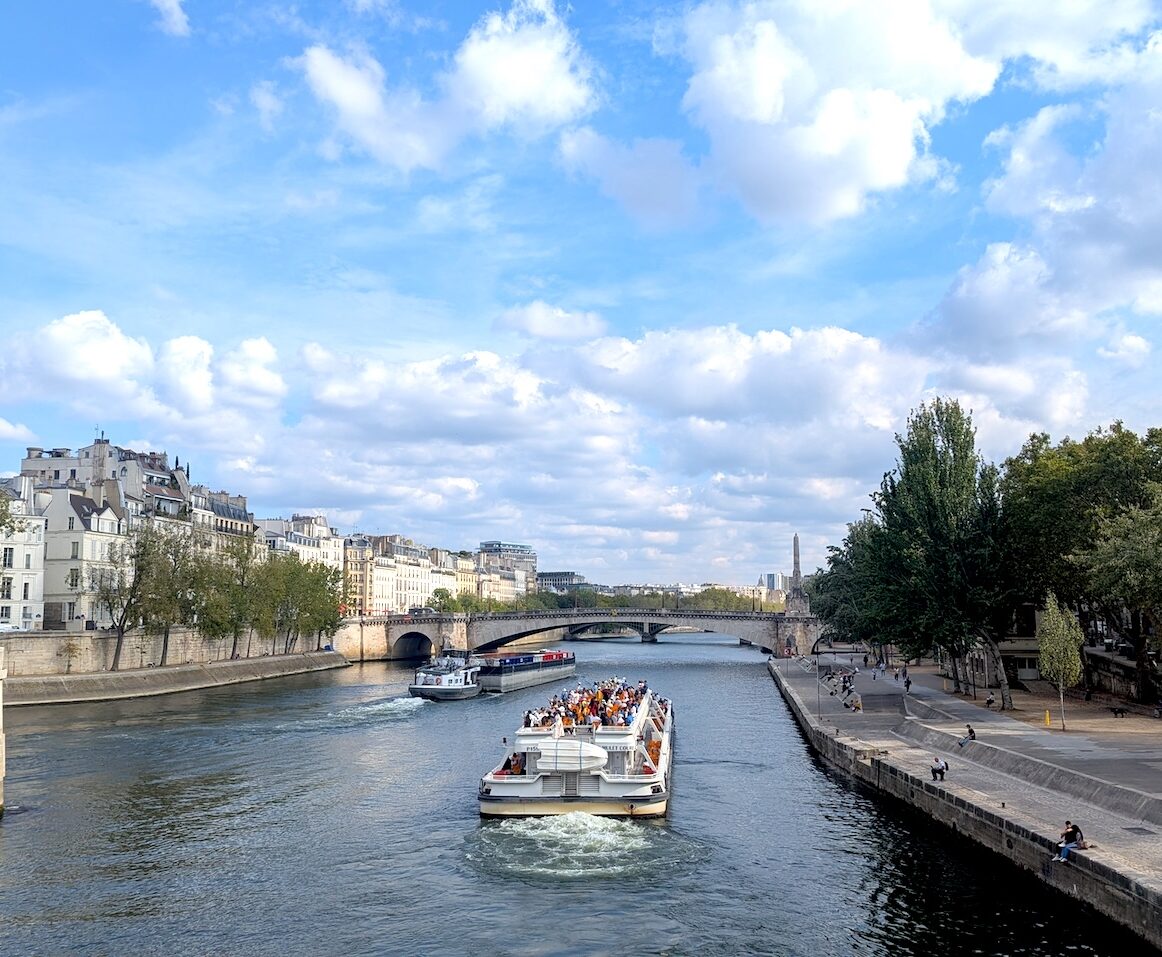
When you think of Paris, you think of the Seine. Winding its way from Burgundy to the English Channel, it cuts through the city from east to west, dividing it into the Rive Gauche and the Rive Droite. But few people know that another river lies hidden beneath their feet: the Bièvre, buried underground for more than a century. Now, parts of it are set to see daylight again.
Originating in Guyancourt, in the Yvelines department, the Bièvre once wound its way through the 13th and 5th arrondissements before emptying into the Seine near Gare d’Austerlitz. By the 11th century, its waters were already powering a string of mills along its banks.
How the Bièvre Became an Industrial Hub
In 1443, a man named Jean Gobelin settled in Faubourg Saint-Marcel, then still on the outskirts of Paris, and established himself along the Bièvre. The family name might ring a bell: it lives on in the Métro station and surrounding neighborhood of Les Gobelins.
The Gobelins made their fortune in textiles, developing a dyeing process that produced a particularly brilliant scarlet red. Their success was so striking that competitors began spreading a rumor: it wasn’t the technique, but the exceptional qualities of the Bièvre’s water that gave their fabrics their distinctive hue. The story drew a wave of dyers to the riverbanks in the second half of the 15th century, each hoping to replicate the Gobelins’ success.
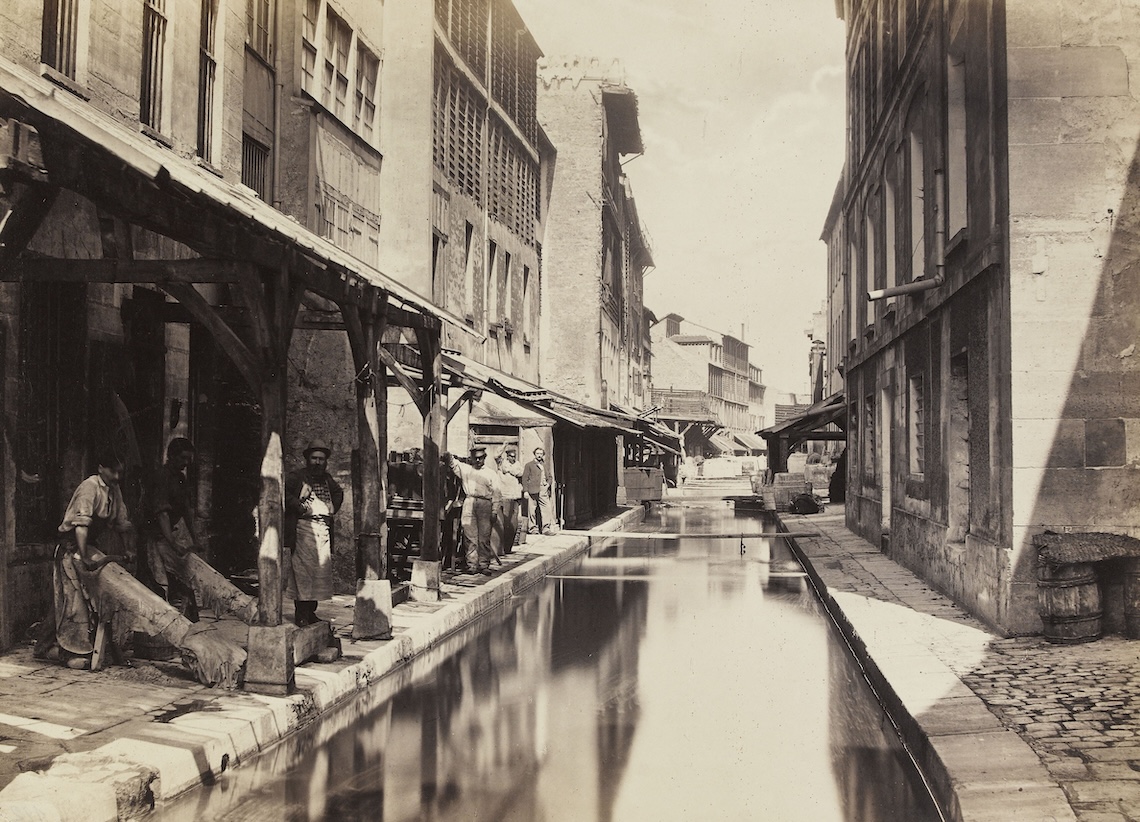
Photographie de Charles Marville (1813-1879). Paris, musée Carnavalet.
Following a royal decree in 1672 that forced certain businesses out of Paris, many tanners and leatherworkers found refuge along the Bièvre, which flowed through what were then the city’s suburbs. By the 18th century, dye works, laundries, tanneries, leather workshops, and local residents were all competing for the river’s water. Warehouses and factories soon joined them, turning its banks into a thriving industrial hub.
A Breeding Ground for Disease
But this concentration of activity came at a cost. The Bièvre became increasingly polluted as residents dumped rubbish and human waste into its waters, while artisans discharged toxic chemicals, soapy wastewater, industrial refuse, and animal remains. Overexploited and poorly maintained, the river gradually turned into an open sewer, notorious for its foul stench and feared as a breeding ground for disease.
Eventually, the city decided there was only one way to deal with the problem: make the river disappear. In 1828, work began to bury the Bièvre beneath the streets of Paris. By 1912, it had vanished entirely from the city’s surface, taking its industrial past and its pollution out of sight.
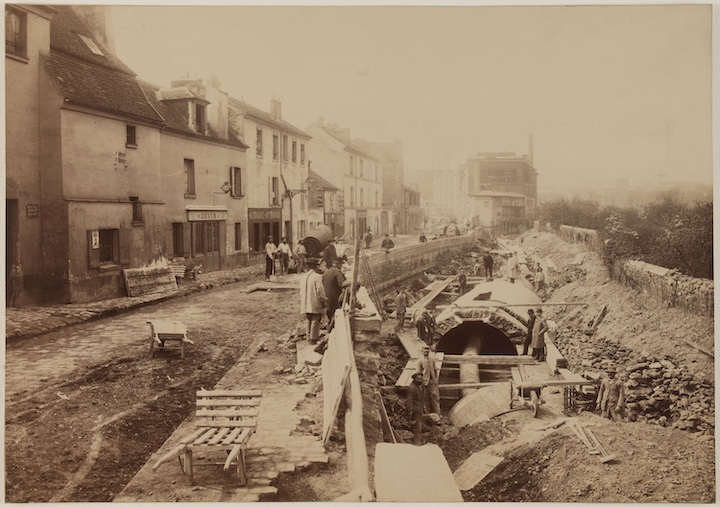
Photographie d’Henri-Cimarosa Godefroy (1837-1913). Tirage sur papier albuminé. Paris, musée Carnavalet.
What Remains of the Bièvre Today
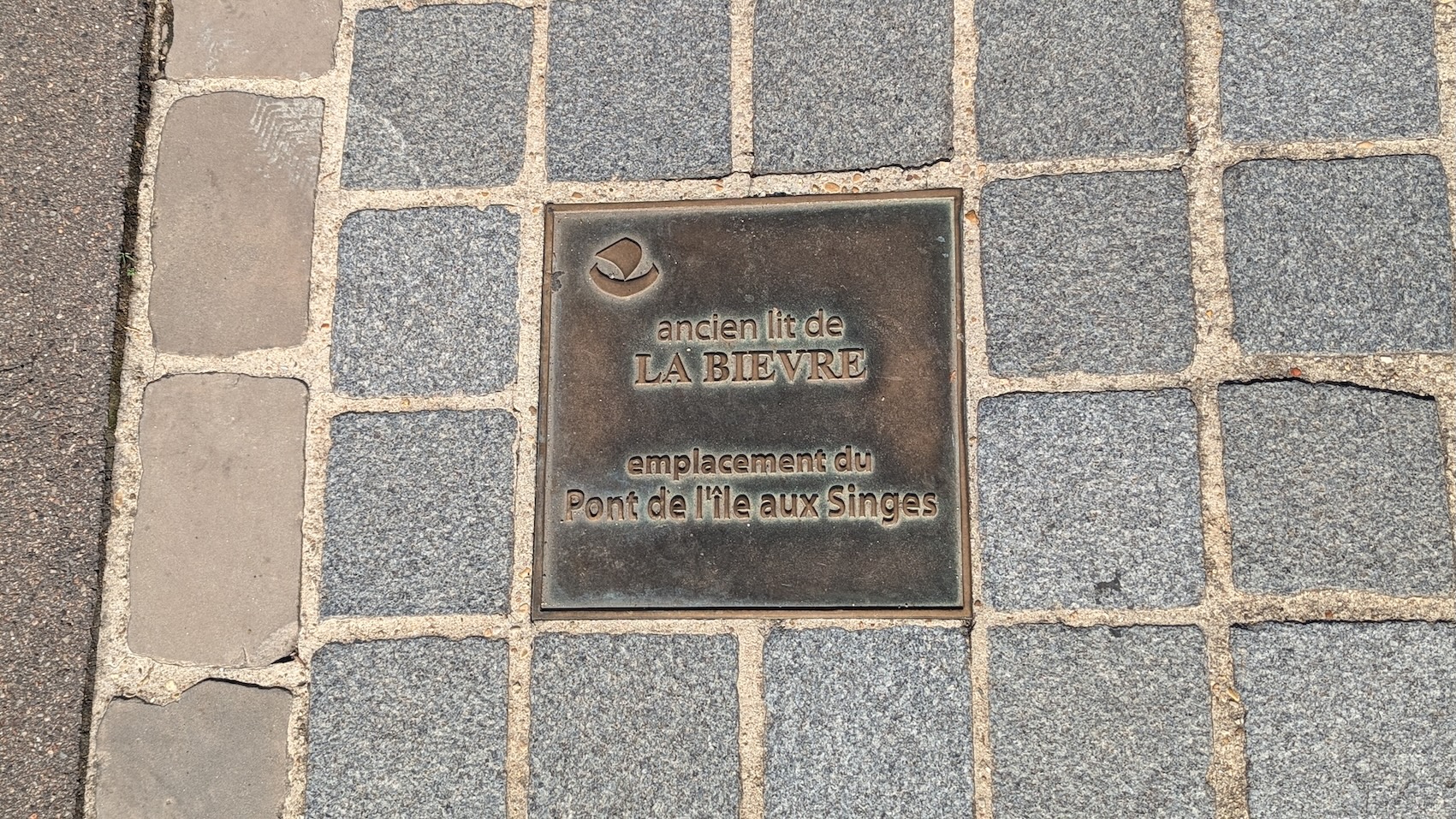
Walk through the 13th and 5th arrondissements, and watch your step. The Bièvre may have disappeared from view, but its underground course is still marked by metal plaques embedded in the pavement. And the river has left its mark on the city in other ways, too.
Take the métro station Glacière, whose name is a nod to the Bièvre’s icy past. In winter, the river would freeze over. While some took to the ice for a spot of skating, others saw a business opportunity: they cut the ice into blocks and stored them in masonry wells known as glacières. Come summer, the ice was used to make sorbets and chill drinks.
And then there’s Rue de Bièvre, in the 5th arrondissement, whose name is another reminder that the river was once an integral part of Parisian life.
The Return of the River
While the Bièvre has already made a comeback above ground in parts of the Paris suburbs, plans are now underway to bring it back to the surface within the capital itself. The flagship project? Reopening a 500-metre stretch of the river at Parc Kellermann, in the 13th arrondissement. Originally targeted for 2028, the project is still in development, with the precise construction and reopening dates yet to be confirmed.
Perhaps, on a future visit to Paris, you’ll get to see its second river with your own eyes – a secret hiding in plain sight for more than a century. And if you’re curious about the many other secrets the French capital has up its sleeve, we’d love to let you in on a few. Get in touch to plan your bespoke Paris itinerary.